Engraving museum
Schlotter Foundation Audio Guide (Fundación Schlotter)
A German engraver marked by war came to Altea looking for light and ended up leaving his work in a 17th-century house, opposite the climb to the Portal Vell.
- 45 min of audio
- Art and engraving
The Schlotter Foundation occupies the Casa de Toni el Fuster, a 17th-century house on the corner of the streets Santa Teresa and Calvari, right where Altea’s old town begins. The painter and engraver Eberhard Schlotter turned it in 1995 into a foundation devoted to the visual arts, and today its four floors hold a storeroom, workshops, offices and exhibition rooms, with space also for concerts and lectures.
In 1941, aged 20, Schlotter was the youngest artist at the Great German Art Exhibition in Munich, the Nazi regime’s official showcase. That same year a self-portrait of his was declared degenerate art and months later he was sent to the Soviet front. Decades later, Altea’s white light would be both his refuge and the place to leave his etchings.
Highlights
- Casa de Toni el Fuster — a 17th-century house opposite the Portal Vell
- Schlotter’s etchings — the technique he practised most, with his terse signature “es”
- Don Quixote read by Camilo José Cela — etched in 1980-81
- 1941 — exhibited in Munich and declared degenerate art the same year
- Reopening in 2019 — 60 oil paintings, 300 watercolours and 1,000 etchings
Eberhard Schlotter first dropped anchor in the port of Altea in 1952, on his way to Andalusia. He did not continue his journey for long: by about 1956 he had settled in the town and in 1972 he fixed his permanent residence here, although the sources do not fully agree on the dates of that arrival. When in 2001 he was asked why Altea, he summed it up in two sentences: he wanted peace and quiet in a suitable place and was looking for light after the horror of the Second World War.
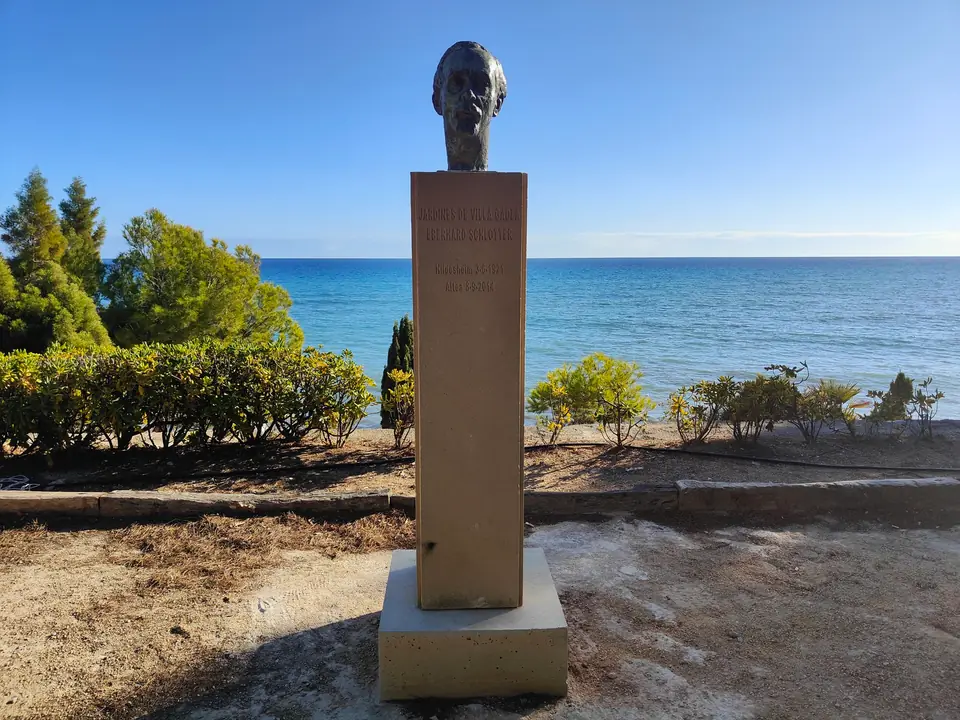
The history of the Schlotter Foundation is that of this search. In 1995 the painter created it in a 17th-century house in the old town for the exhibition, development and knowledge of the visual arts. He died in his Altea home on 8 September 2014 and, after a few years closed, the foundation reopened in 2019 under his daughter Sibylle, with a show that brought together 60 oil paintings, 300 watercolours and 1,000 etchings along with wood carvings by his father and his brother. What to see at the Schlotter Foundation goes beyond the paintings: the house, the engraver’s craft and a biography crossed by war, literary friendship and illness. Walking it with the audio guide, documented and checked against historical sources, lets each room be linked to the chapter of life that explains it.
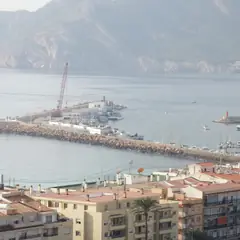
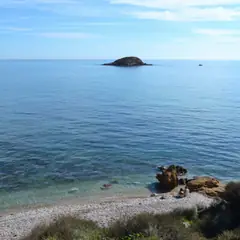
The house stands opposite the climb to the Portal Vell, and the light Schlotter came looking for is the same that bathes the basin of the Port of Altea, at the foot of the white old town.
A white corner opposite the Portal Vell
Schlotter Foundation
Summary of this stop
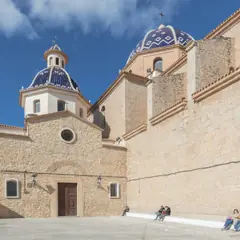
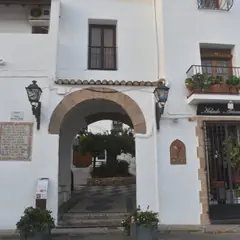
The visit begins in the street, before the façade of the Casa de Toni el Fuster, on the corner between Santa Teresa and Calvari. Right opposite starts the climb to the Portal Vell, the historic gate of the old town, and a few steps away stands the church of Our Lady of Consolation. The architecture of the Schlotter Foundation is that of a domestic-scale house, with four floors that now hold a storeroom, offices, workshops and exhibition rooms, as well as a concert hall and a lecture room.
What drew a painter from the north to this slope was, by his own account, the light. In 1970, already divided between Altea and Germany, he painted an oil triptych whose title sounds like an emigrant’s confession: something like “Oh, how I will shiver missing the sun; here I am a gentleman, at home a parasite”. That sun that hurt to lose is the key to the stop, and the full sense of that sentence is better understood in front of the corner itself.
1941: the same year in the showcase and on the blacklist
Schlotter’s works at the entrance
Summary of this stop
At the entrance of the foundation, works by Schlotter himself are displayed, and behind them lies a war wound. In 1941, aged barely 20, he was the youngest artist at the Great German Art Exhibition in Munich, the official showcase of the Nazi regime’s art. That same year, the Gauleiter Hartmann Lauterbacher declared his “Self-portrait with cigarette” degenerate art, and in October Schlotter was called up and sent to the Soviet front, where he was gravely wounded in 1944.
The family account presents him as a young man punished by Nazism, while a 2004 monograph qualifies those “life legends” and stresses his pride at having taken part in the official show: the history of the Schlotter Foundation also includes that debate. What the documented tradition does record is what came after the wound. In a military hospital, on one of his treatment days, he met the nurse Dorothea von der Leyen; they married on 30 August 1944 and not even then did he stop drawing. She was his companion in the move to Altea and until her death in 1993.
Etchings, Cela’s Quixote and the signature “es”
Exhibition rooms
Summary of this stop
The exhibition rooms alternate the painter’s holdings, oil paintings, watercolours and above all etchings, with temporary shows. Etching was the technique he practised most, and with it he engraved “Don Quixote read by Camilo José Cela” in 1980-81, whose plates he donated to the Real Academia de Bellas Artes de San Fernando. In many works appears his terse signature, a simple “es”, with a Freudian resonance and tied to the literary influence of his friend the novelist Arno Schmidt, who went as far as calling him the greatest illustrator of the century.
Beneath those luminous engravings runs a shadow. In 1971 Dorothea began to fight a cancer that would end her life in 1993, and those twenty-two years fed an obsessive series of paintings of urns. After her death, the holdings of the painter’s first foundation, in Hildesheim, passed to a museum in Celle, and two years later, on 6 September 1995, the one in Altea was born. After Schlotter’s death, the house closed for a few years because of internal and financial problems and reopened in September 2019, with his daughter Sibylle at its head: an ending that makes these rooms the place where the work finally found its home.