Inca archaeology
Andean Sanctuaries Museum Audio Guide (Museo Santuarios Andinos)
One block from the Plaza de Armas, a university mansion keeps Juanita, the Inca girl offered on the summit of Ampato and found frozen, not mummified, five centuries later.
- 60 min of audio
- Inca high-mountain offerings
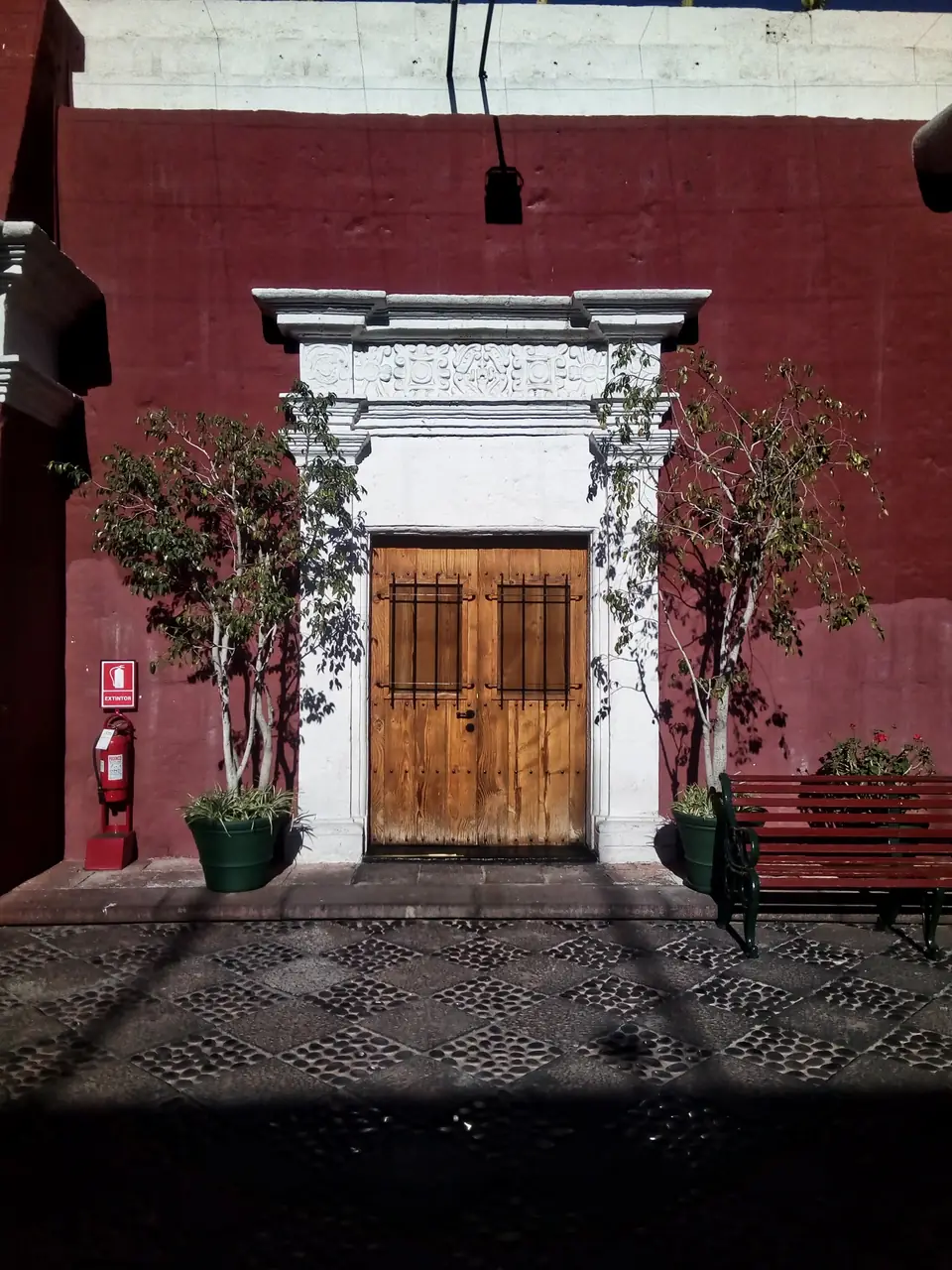
The Andean Sanctuaries Museum was born in 1996, by resolution of the Catholic University of Santa María, to preserve what the High Sanctuaries of the Southern Andes project, begun in 1980 by José Antonio Chávez and Johan Reinhard, had been bringing down from the peaks. Its home is the university's mansion on the first block of La Merced Street, with the blue protected-property shield on the façade. Inside, in dim light, follow one another the room of the discovery, the ceramics, the metals and the textiles of an Inca capacocha, until the display case of Juanita.
Juanita's story is made of ironies. According to Andean tradition, she was given to Ampato, an apu or mountain god, so that fire would not melt the ice of its summit; in 1995 it was the hot ash of neighbouring Sabancaya that melted that ice and left her exposed. And an Arequipa-born man who confessed to hating mummies, Mario Vargas Llosa, came out of this room writing that he would have stolen her to take her home.
Highlights
- Juanita — an Inca adolescent found frozen in 1995 near the summit of Ampato
- Display case chilled below zero in the fifth room, with Juanita seated and knees drawn up
- Macaw-feather headdress and alpaca mantle, shown for the first time in 2020
- Ceramics room — 20 polychrome pieces and an Inca aryballos a metre tall
- Silver llamas, metal idols and Spondylus shells brought up from the Pacific
On 8 September 1995, around a quarter past five in the afternoon, the anthropologist Johan Reinhard and the Arequipa mountaineer Miguel Zárate found near the summit of the snow-capped Ampato the funerary bundle of an Inca adolescent. The Peruvian members of the team called her Juanita, a simple nickname common in the villages of the Colca; it is often repeated that the name honours Reinhard, but he himself says he only realised later that it resembled his own. A year later, the Catholic University of Santa María created the Andean Sanctuaries Museum to keep her together with the rest of the finds from the high sanctuaries of the southern Andes.
The history of the Andean Sanctuaries Museum cannot be understood without the volcanoes that surround Arequipa: here they stop being scenery and reveal themselves as altars and tombs. The visit inside is made in a group with museum staff, in dimly lit rooms; the audio guide, documented and checked against historical sources, accompanies before crossing the door and between rooms, so as to reach Juanita’s display case knowing what lies in front.
Misti, in whose crater children offered by the Incas were found, is seen head-on from the Yanahuara Viewpoint, and a few blocks to the north waits the other long visit of the historic centre, the Santa Catalina Monastery.
A mansion that keeps the volcanoes
Andean Sanctuaries Museum
Summary of this stop
The façade on La Merced Street announces nothing extraordinary: a university mansion, also home to its Casa de la Cultura, with the blue protected-property shield placed in 2019. And yet it is the repository of decades of expeditions to the peaks, those of the project José Antonio Chávez and Johan Reinhard began in 1980. From those finds the museum emerged in 1996, and in 2020 Peru declared 81 of its holdings National Cultural Heritage, among them four mummies including Juanita.
Juanita is not the house’s only offering. From the crater of Misti, the city’s volcano, the remains of eight offered children were extracted in 1998, in blocks of ice: the largest capacocha known. They spent almost two decades in a university freezer, until they were thawed in a laboratory in 2018. Also kept is another frozen maiden, found on Pichu Pichu at 5,510 metres and nicknamed Urpicha, Little Dove.
Her story is, according to a documented tradition, that of an offering probably meant to calm Misti itself, which erupted around 1440 and still looms above the rooftops of Arequipa. What links these girls and the children of the crater with the city that now spreads at their feet is what the narration reveals in front of this façade.
The volcano that uncovered Juanita
Audiovisual room
Summary of this stop
The first room of the tour is audiovisual: a short video shows how and where Juanita was found in 1995. The scene is that of a September afternoon at over six thousand metres. The eruption of neighbouring Sabancaya had covered Ampato in hot ash, which melted the ice and snow accumulated for some 500 years over the tomb and left the bundle in view.
Then came the race against the thaw. Reinhard carried the frozen body, of about 44 kilos, down the mountain in his backpack, to keep it from thawing and degrading before reaching Arequipa.
For the Incas Ampato was an apu, a mountain god who gave water and held back avalanches in exchange for offerings. According to tradition, Juanita was given to him to appease his fury, because an eruption could melt the glacier on the summit and bring drought to one of the driest lands on the planet. Five centuries later exactly what that offering was meant to prevent happened, and how that irony closes is left for the audio guide.
Jungle feathers on the summit
Juanita's headdress and mantle
Summary of this stop
Juanita’s trousseau works as a map of the Inca Empire. She was buried wrapped in a brightly coloured aksu, with an alpaca-wool mantle fastened with a silver pin and a headdress of red macaw feathers, an Amazonian bird. Her clothing resembles the textiles of the Cusco elite. The headdress and mantle were not seen in public until November 2020, when the museum reopened after more than seven months closed because of covid-19, coinciding with the 25th anniversary of the find.
Around them are spread the other rooms: the ceramics room, with 20 polychrome pieces found beside the body, among them an Inca aryballos a metre tall; the metals room, with some 15 pieces of gold, silver and copper, miniature llamas and male and female idols; tiny woven dolls that represented the children offered to the apu, and reddish Spondylus shells brought from the Pacific coast up to the peaks.
Jungle, coast and capital gathered above six thousand metres: what that geography says about who Juanita was and why she was chosen is the thread the narration follows in this room.
Juanita, frozen and not mummified
Juanita's chilled display case
Summary of this stop
In the fifth room, at the centre, a glass case below zero keeps Juanita seated, with her knees drawn up. The press does not agree on the exact temperature of the case, but does on the essentials: Juanita is not mummified but frozen. Unlike many desiccated Inca high-mountain mummies, she retains skin, internal organs, hair, blood and even the contents of her stomach. Her face is worse preserved than her body: about two weeks before the discovery, the bundle fell some 200 metres into the crater and lost the fabric covering her face. Every year, from January to March, she leaves the case for a thorough conservation process.
In 1996 she travelled to the Johns Hopkins Hospital in the United States, where the tomography by the radiologist Elliot K. Fishman revealed a fractured right eye socket and a skull fracture of about 5 centimetres: she died from a blow to the head. Her age is still a matter of debate. For years 11 or 12 was mentioned and Reinhard even spoke of about 13, while the reconstruction of her face presented in 2023 by the university and the Centre for Andean Studies of the University of Warsaw, after five years of analysis, concluded she was 14 or 15.
Before this same case stood, some two and a half years after the discovery, Mario Vargas Llosa, an Arequipa-born writer who confessed to feeling revulsion at mummies and who went in only because his friend, the painter Fernando de Szyszlo, asked him to. He expected his stomach to turn and came out moved. What he wrote afterwards, between tenderness and a very serious accusation, is the close the audio guide reserves for the end of the tour.