Ayyubid fortress
Saladin Citadel Audio Guide (Salah El-Din Citadel)
The fortress Saladin ordered built and never lived in: almost seven centuries of Egyptian power, a well dug into the rock, a mosque stripped of its marble and the alabaster silhouette that crowns Cairo.
- 90 min of audio
- Alabaster mosque
The Citadel of Saladin occupies a spur of the Muqattam, high above Cairo. Saladin ordered it built in 1176 and entrusted the work to Baha al-Din Qaraqush; an inscription found at Bab al-Mudarraj, the only original gate to survive, dates its completion to 1183-1184. For almost seven centuries it was the seat of Egyptian power, until in 1874 Khedive Ismail moved to Abdin Palace. Ayyubids, Mamluks, Ottomans and Muhammad Ali left in it walls, mosques and palaces, layer upon layer.
Each master of the hill made room by dismantling the one before. For Saladin’s walls, according to al-Maqrizi, the blocks of three small Giza pyramids were used; Selim I tore the marble from the al-Nasir Muhammad mosque and sent it to Istanbul; and Muhammad Ali demolished the Mamluk palaces to raise his alabaster mosque, years after closing a gate on some 470 Mamluks on the road down to Bab al-Azab.
Highlights
- Muhammad Ali Mosque — Ottoman-plan dome, alabaster courtyard and two minarets some 84 metres tall
- Yusuf’s Well — cut into the rock to about 90 metres, with a spiral stair and ox-driven water wheels
- Al-Nasir Muhammad Mosque — from 1318, with reused Pharaonic and Roman-Byzantine columns
- Police Museum terrace — viewpoint over the road of the 1811 massacre and Baybars’s frieze of lions
- Louis Philippe clock — a French gift that stood still for almost two centuries and ran again in 2021
From almost anywhere in Cairo, a great dome and two minarets thin as pencils can be seen on the Muqattam hill. Beneath that silhouette lies the Citadel of Saladin, the fortress the sultan ordered built in 1176, on returning to Cairo, and which was raised as forced labour by Christian prisoners captured in the campaigns against the Crusaders. An inscription at Bab al-Mudarraj dates its completion to 1183-1184. It was the seat of Egyptian power for almost seven centuries, never suffered a true siege and ceased to be the seat of government in 1874. In the 20th century it served as a garrison for the British army and later the Egyptian one, and in 1983 it opened much of its enclosure to the public; today it hosts the Citadel Festival of music and song each year.
The history of the Citadel of Saladin cannot be read in a single building, but in what each era took from the one before. That it never withstood a siege does not mean it did not make war: according to documented tradition, in October 1798, during Cairo’s revolt against Napoleon’s occupation, the French hauled cannon onto its walls and bombarded the rebel districts from there. And on the Police Museum esplanade stands a Krupp cannon of 1871 tied to the custom of announcing the end of the Ramadan fast with a shot, a tradition whose origin Cairene memory tells in three different ways. It fell silent in 1992 and thundered again at iftar time in April 2021.
What to see at the Citadel of Saladin, and how its Ayyubid, Mamluk and Ottoman architecture fits together, is what the audio guide unpacks in five stops and ninety minutes of walking, with narration documented and fact-checked against historical sources.
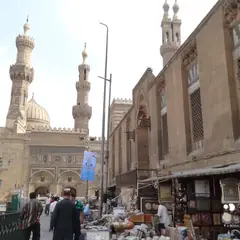
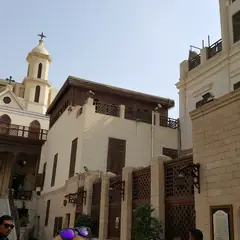
The same medieval Cairo continues at the Al-Azhar Mosque and in the Khan el-Khalili souk, while the Hanging Church tells the story of another fortress, Roman Babylon, on whose towers it stands.
Alabaster and a clock that never told the time
Mosque of Muhammad Ali
Summary of this stop
The courtyard of the Muhammad Ali Mosque is the heart of the image Cairo projects of itself, and it turns out to be a quotation. Built from 1830 and finished around 1848, with decoration continuing until 1857 according to the most cited chronology, it copies the plan of the great Ottoman mosques of Istanbul: a central dome surrounded by semi-domes and two pencil minarets reaching some 84 metres. Dates vary from one source to another, and the name of the final architect remains unclear.
The lower walls and the courtyard are clad in alabaster, a stone ill suited to building that Muhammad Ali imposed all the same. On the north-west wall of the courtyard rises a tower of openwork iron and copper with stained glass: the clock that Louis Philippe of France gave the pasha in 1845-1846. It did not work from its arrival; the repair ordered by King Farouk in 1943, recalled by a plaque at its base, only made it run for three days, and it was not started again until September 2021. Much of the press presents it as the counterpart to the Luxor obelisk now in Paris, although an official of the Supreme Council of Antiquities denied that link in 2021. Inside the prayer hall, behind a bronze grille, rests Muhammad Ali himself, and the reason for so much alabaster has an explanation the narration keeps for that courtyard.
The well that bears Saladin’s name
Yusuf’s Well
Summary of this stop
Beside the al-Nasir Muhammad mosque opens the mouth of Yusuf’s Well, cut into the rock on Saladin’s orders between 1176 and 1193. It descends in two stages, surrounded by a spiral stair, to a depth that Egypt’s Ministry of Tourism and Antiquities puts at about 90 metres and other sources at 85. On each level, an ox-driven water wheel raised the water towards the fortress.
The name often causes confusion: it does not refer to the patriarch Joseph, but to Yusuf, Saladin’s given name. The great engineering work also had an inglorious end. When Qaraqush deepened the excavation to increase the flow, the water turned brackish, and the Citadel ended up drinking from the Nile through the aqueduct that al-Nasir Muhammad extended in 1312. How work was done at that depth, in the dark and with draught animals, is what the audio guide reconstructs at the edge of the well.
Pharaonic columns in a bare mosque
Al-Nasir Muhammad Mosque
Summary of this stop
The al-Nasir Muhammad mosque, built in 1318 as the Citadel’s royal mosque and renewed in 1335, is a hypostyle hall held up by reused Pharaonic and Roman-Byzantine columns. Its two minarets are topped with green and turquoise tiles, but the walls are bare: after conquering Egypt in 1517, the Ottoman sultan Selim I tore off almost all its marble cladding and sent it to Istanbul.
Across the esplanade, the absence continues. In 1825 Muhammad Ali demolished the great Mamluk buildings of the southern enclosure, among them the Great Iwan and the Ablaq Palace of this same sultan, to make room for his new mosque. Between the two mosques the idea running through the whole route can be read in a few steps, and the narration develops it before those empty walls.
The ramp where the Mamluks met their end
Police Museum terrace
Summary of this stop
The Police Museum terrace is a viewpoint over Salah al-Din Square, with the Sultan Hassan and al-Rifai mosques in the background and, beside it, the excavated remains of al-Ashraf Khalil’s reception hall. From here can also be seen Bab al-Azab, the western gate of 1754, and the sunken road between rocks that descends to it. On a nearby tower, a procession of carved lions recalls the Mamluk sultan Baybars, who reigned from 1260 to 1277 and had the lion as his emblem.
That road was a trap. On 1 March 1811, after a ceremony for Tusun Pasha’s departure against the Wahhabis, Muhammad Ali had the gate closed on some 470 Mamluks, chiefs and retinue, and his Albanian soldiers shot them down from above. According to accounts of the time, that same morning the pasha had received them with every courtesy and invited them to coffee; afterwards, over three days, about a thousand Mamluks fell across the city and five hundred houses were looted.
The scene ended up in a painting by the French artist Horace Vernet, which Napoleon III gave to Queen Victoria. The legend of the Mamluk who escaped by leaping on horseback from the wall has circulated ever since, though it belongs more to folklore than to history, and where that painting hangs today is one of the twists the narration reserves for the terrace.
A tomb older than the fortress
Sulayman Pasha Mosque
Summary of this stop
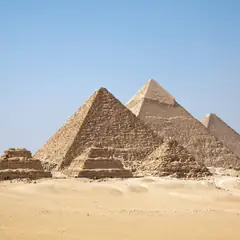
In the northern enclosure, between round towers from Saladin’s time such as Burj al-Ramla and Burj al-Hadid and rectangular towers added by al-Adil, the Citadel’s oldest layout survives. Its walls were raised with Muqattam limestone and, according to al-Maqrizi, with blocks from three small Giza pyramids dismantled as a quarry; other sources add pyramids of Abusir, and exactly which pyramids remains unsettled. Saladin never came to live here: he died in 1193, and the first to settle was his nephew al-Kamil, in the palaces of the southern enclosure, in 1206.
In this sector stands the mosque that Sulayman Pasha al-Khadim built in 1528 for the Janissaries, the first of Ottoman style in Egypt. Cairenes call it the Sidi Sariya al-Jabal mosque, a name that evokes a famous episode attributed to the caliph Umar and a cry shouted from the pulpit in Medina. In its courtyard, beneath a dome larger than the others, there is a shrine dedicated to Sariya, a companion of the Prophet; who had it built, and when, is the route’s last surprise. The mosque reopened in September 2023 after five years of restoration.