Hanok quarter since 682
Gyochon Hanok Village Audio Guide
A hanok quarter born on the site of Silla's first state academy, from the year 682, where the richest family in Gyeongju lowered its house so as not to stand above the sages. Humility here is measured in handspans of ground, in pine trees and in a liquor that is still fermenting.
- 45 min of audio
- Hanok and Confucianism
The Gyochon Hanok Village carries its origin in its name: in 682, the second year of King Sinmun, Silla founded its first state academy, the Gukhak, here; it became the hyanghak in the Goryeo period and the hyanggyo in the Joseon period, and from that school the quarter takes its names, Gyodong, Gyochon and Gyori. The Gyeongju Hyanggyo, the largest in North Gyeongsang Province, was renovated in 1492 on the model of the royal academy in Seoul, burned in the Imjin War and was rebuilt from 1600.
Beside the school settled the Choi, the richest family in town, and they did so by stooping: they lowered the ground of their house by between 90 and 150 centimetres so as not to stand above the sages, paid for the repair of the Hyanggyo and supplied it with rice, books and paper. The earth they removed became a forest, and in one of their houses, the one of 1779, the rice liquor Gyodong Beopju is still made.
Highlights
- Gyeongju Hyanggyo — the Confucian school on the site of the 682 academy
- Daeseongjeon shrine — steps that, according to tradition, came from the Anapji pond
- Songdan terrace — the pines that until 1856 stood one for each of the 18 sages
- Choi house — the mansion lowered before the school and its cauldron of porridge for the hungry
- Gyodong Beopju house — the 1779 house where a nationally designated liquor ferments
The story of Gyochon has the backdrop of a moral fable. The Choi family’s memory tells that in a famine year some peasants raided Choe Guk-seon’s granary and that he, instead of hunting for the culprits, halved the rent of his tenants; it is also said that at the end of his life he had his debtors’ promissory notes burned. Another legend, one of those told in a low voice, explains with a guardian snake why the house’s fortune passed to the second son’s branch.
How long that wealth lasted varies with the teller, three hundred or four hundred years, and so do the details of how much and when the houses were lowered before the school. What does not change is the gesture. For the Choi, living beside the sages demanded standing below them, and that difference in level can still be seen as you walk between the walls.
What to see in Gyochon is spread over two compounds and a lane: the Hyanggyo with its shrine, its study hall and its pine terrace; the Choi main house with its last granary; and the liquor house. The audio guide covers the quarter in five stops, with documented narration checked against historical sources, from the school’s gateway to the well where the liquor begins.
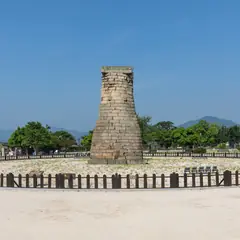
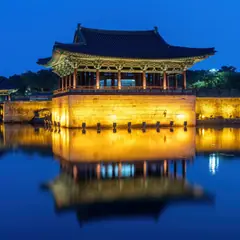
The steps of the Confucian shrine point, according to tradition, to the Wolji Pond, a kilometre from the quarter, and some 500 metres away stands the tower of Cheomseongdae, Queen Seondeok’s observatory.
The gateway over the university of 682
Gyeongju Hyanggyo
Summary of this stop
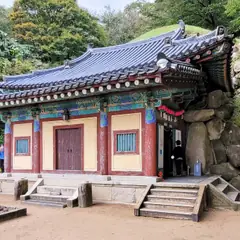
On the north edge of the quarter, a low wall and a gateway mark the Gyeongju Hyanggyo. People have studied here, under different names, since 682: the Gukhak that Silla founded in the second year of King Sinmun became the hyanghak under Goryeo and the hyanggyo under Joseon. Gyodong, Gyochon and Gyori, the quarter’s names, mean the same thing: the village of the school.
The Samguk Yusa, in the 13th century, added a love story to this site. Speaking of the Yoseok palace, where the monk Wonhyo met the widowed princess, daughter of King Muyeol, it glosses that the palace is “today the school”. From that encounter was born Seol Chong, one of Silla’s sages. The exact location of the palace is still unknown.
Tradition completes the scene with a ruse: Wonhyo, who sang through the streets a ditty about the pillar that holds up the sky, deliberately let himself fall into the Muncheon stream, south of the village, so that he would be taken to dry off at the princess’s palace. What the king understood on hearing that ditty is what the narration tells at the gateway.
Steps from Anapji before a resurrected shrine
Daeseongjeon shrine and its stone steps
Summary of this stop
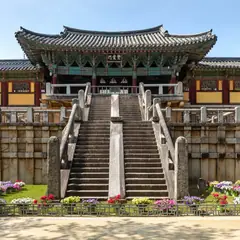
At the front of the compound rises the Daeseongjeon, the three-bay shrine dedicated to Confucius and the sages, flanked by the long wings Dongmu and Seomu. It has been Treasure No. 1727 since 2011 and stays closed except for the seokjeon, the rite held every year in the second and eighth lunar months.
The shrine is a resurrection. The school burned during the Imjin War, between 1592 and 1598; the sages’ tablets were kept meanwhile in the Dodeokam hermitage, on Mount Dodeok, and in 1600 Governor Yi Si-bal rebuilt the Daeseongjeon and returned them to their place. The teaching hall was rebuilt in 1614.
The worn stone of the steps in front of the shrine holds another story: according to tradition, they come from Silla’s royal pond, the Anapji, and in the base of the study hall appear reused pieces of stone pagodas. What that recycling says about Joseon-era Gyeongju is explained in the courtyard.
Eighteen pines for eighteen sages
Myeongnyundang hall and Songdan pine terrace
Summary of this stop
Behind the shrine, on a lower level, lies the Myeongnyundang, the five-bay study hall, with the students’ dormitories at the sides. This is the jeonmyo-huhak layout: the shrine in front, the school behind. In 1492 Governor Choe Eung-hyeon renovated the Hyanggyo taking as his model the Seonggyungwan, the royal academy of Hanyang, present-day Seoul.
North of the hall rises the Songdan terrace, with its stone wall of 1655. In 1601 the teacher Son Gi-yang planted pines there brought from Mount Namsan, and until 1856 there were exactly 18, one for each of the 18 Korean sages venerated in the school.
Today’s pines are heirs of that planting. Why a small grove could work as an altar to the sages, and what happened to that exact count, is what the audio guide develops in front of the terrace.
A handspan lower than the sages
Choi house wall beside the Hyanggyo
Summary of this stop
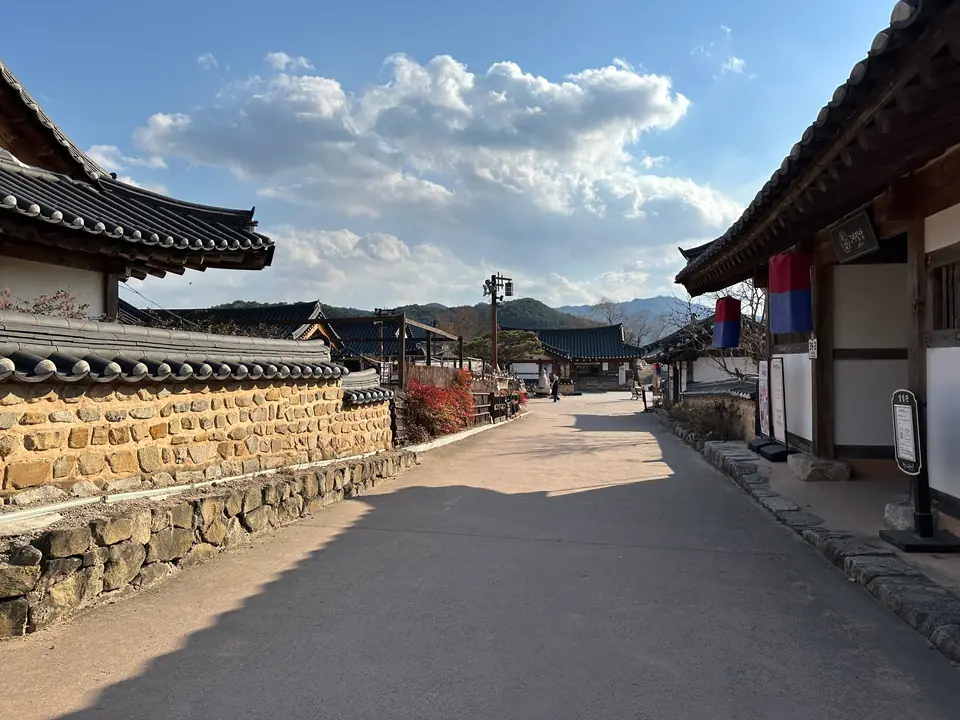
In the lane between the Hyanggyo and the Choi main house, the difference in level becomes visible. To settle beside the school, Choe Eon-gyeong donated 1,000 seok of rice to the Hyanggyo, paid for its repair and supplied it continuously with rice, books and hanji paper from the family’s workshops. When building, the Choi lowered the ground of their house by between 90 and 150 centimetres, interposed lower servants’ houses between the two compounds and placed their ancestral shrine to the west, not to the east as was usual, out of deference to the school.
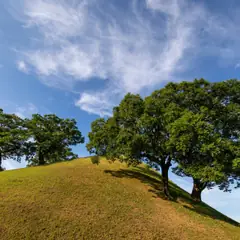
The excavated earth was piled up as a hill and planted with trees over some 5,000 pyeong, a forest that made up for the mountain the village lacked behind it. After the fellings of the late colonial period and the construction of schools in 1940 and 1952, about ten old trees remain among the houses. The main house burned in a fire that the press of the time dated to 22 November 1970, and its restoration was not completed until 2006.
The Choi house was also a refuge. In the front courtyard hung a large cauldron from which anyone hungry could take a ladle of porridge, and for travellers there was a rice chest designed so that each would take only his ration. How many guests the house managed to lodge in a single day is one of the family memories the narration keeps for this corner.
The 1779 house that still ferments
Gyodong Beopju house
Summary of this stop
In front of the main house stands the Choi family’s first house in Gyochon, which was not new: Choe Eon-gyeong dismantled the family house of Ijo-ri, built in 1644, and reassembled it here with 89 kan, ten fewer than the 99 customary for a great house. The ridge beam was raised in January 1779. It is today the house of the Gyodong Beopju.
Here the family’s glutinous rice liquor is made, a National Intangible Cultural Heritage since 1986, with water from the courtyard well, boiled and cooled, and a double fermentation of about 100 days. Some 50 metres away, the Yoseokgung restaurant, opened in 1972 by a nephew of Choe Jun to preserve the family’s cooking, recalls with its name the princess’s palace from the beginning, although it does not stand on its site.
In 1927 a newspaper reported that in the Choi house an ember had been kept burning for more than two hundred years, and that every son who left to live apart received a share of it. What lies behind that belief in a fire that never goes out is the image with which the audio guide closes the tour.