Museum in a shophouse
Museum of Trade Ceramics Audio Guide (Bảo tàng Gốm sứ Mậu dịch)
A 36-metre-deep timber shophouse keeps the broken plates the port of Hoi An left under its streets and the pottery of a ship sunk in the 15th century. In this museum, every shard says who traded here and from where.
- 30 min of audio
- Restored with Japan in 1995
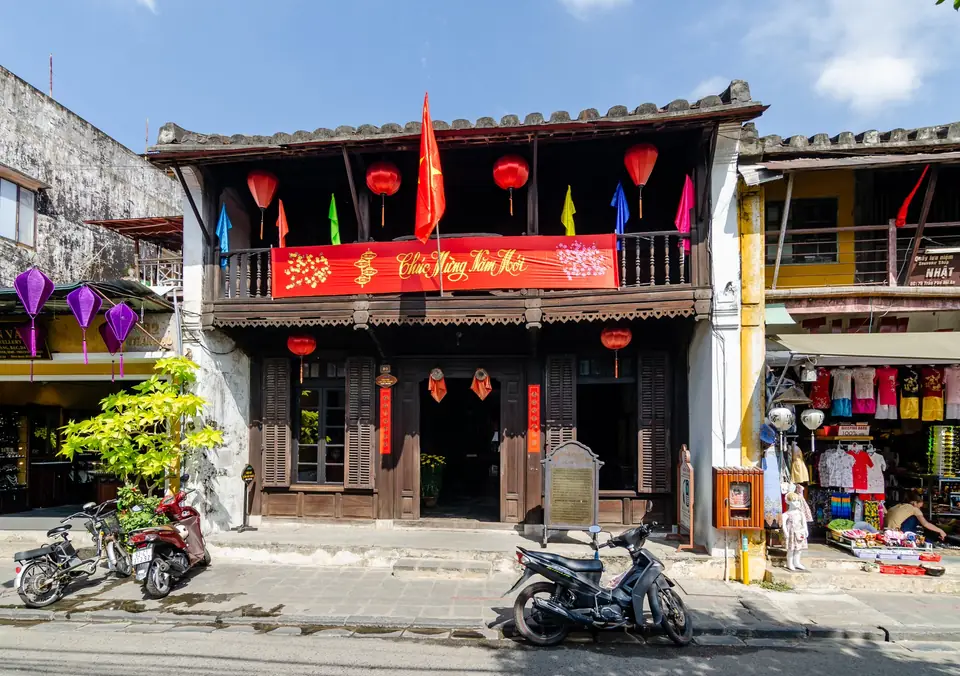
The Museum of Trade Ceramics occupies the house at 80 Trần Phú Street, built around the early 20th century as a home and a business at once. Badly decayed, it was restored with funds from the Japanese agency JICA and under the direction of Japanese architects from Shōwa Women's University, and opened as a museum on 2 October 1995. Two floors, brick walls, a timber structure and âm dương tiles on a plan of 7.5 by 36 metres: the architecture of the Museum of Trade Ceramics is itself a piece of the collection.
The story of its display cases is less peaceful than the house. The Chu Đậu pottery from the Cù Lao Chàm wreck, sunk at a depth of 70 metres, spent years coming out of the sea in fishing nets and ending up in the hands of antique dealers, until an arrest at Đà Nẵng airport exposed the looting. 90% of the cargo ended up in 2000 at an auction in San Francisco; a selection of what stayed in Hoi An is here.
Highlights
- Shophouse at 80 Trần Phú — 7.5 m wide by 36 m deep
- Light well with a rock garden and a cuốn thư relief of inlaid pottery
- 15th-century Chu Đậu ware from the Cù Lao Chàm wreck, at 70 m depth
- Ceramics of the 9th to 19th centuries from old-town excavations
- 17th-century Japanese Hizen bowls found under Trần Phú Street
In Hoi An even a broken plate is a document. The Museum of Trade Ceramics, the Bảo tàng Gốm sứ Mậu dịch, was set up in 1995 in a narrow timber shophouse at 80 Trần Phú Street to gather what the old port left in its subsoil and on the seabed: ceramics of the 9th to 19th centuries from archaeological excavations funded by Japan, Chinese, Japanese, Thai and Vietnamese porcelain, and 15th-century Chu Đậu ware recovered from a ship sunk off the Cù Lao Chàm islands.
When it opened, the museum displayed 268 pieces; with the improvement plan approved in 2012 it extended the rooms to the rear of the upper floor, rebuilt the house’s old kitchen and reached 478 pieces in 2015. The figures in circulation today vary by source and year, as does the exact date the house was built, which some sources place in the early 20th century, others around 1920 and some guides in the 19th. That same year, 2015, it was the first museum in Hoi An to open a rest corner, the “Điểm dừng chân”, with green tea and documentaries about the town.
What to see at the Museum of Trade Ceramics runs from the street inwards: the facade, the light well, the wreck display cases and the upper-floor balcony. The audio guide walks the house in four stops, with narration researched and fact-checked against historical sources, and keeps for each room the story the labels do not tell.
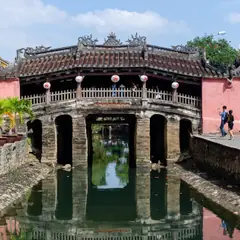
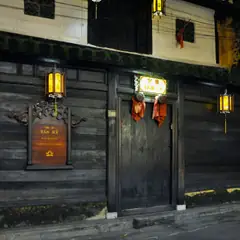
The house is a relative of Tan Ky Old House, another old-town shophouse that is still lived in, and the Japanese bowls in its display cases point back to the quarter that built the Japanese Covered Bridge.
The shophouse Japan rescued
Museum facade
Summary of this stop
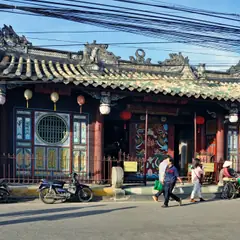
From Trần Phú Street, the museum is barely distinguishable from its neighbours: a narrow two-storey front, an âm dương tile roof and a wooden balcony facing the street. It is the facade of a house built around the early 20th century that worked at once as a home and as a business, a hiệu buôn.
Its second life began when the house was already badly decayed. The Japanese agency JICA funded the restoration and a team of Japanese architects, represented by Shōwa Women’s University, directed its conversion into a museum; the schedule of the works varies by source, but the Hoi An heritage centre fixes the opening on 2 October 1995. That it was Japan that brought the house back to life resonates in a town under whose streets 17th-century Japanese bowls have turned up.
Why that alliance fits the town’s merchant past, and a house devoted precisely to the remains of that trade, is what the audio guide raises in front of the facade.
A light well decorated with broken pottery
Cuốn thư relief of inlaid pottery
Summary of this stop
The architecture of the Museum of Trade Ceramics is best understood from inside. The house occupies a rectangular plan 7.5 metres wide and 36 deep, divided into three sections, front, middle and rear, with brick walls and a timber structure whose pillars rest on marble bases and rise to the roof purlins. Windows and beams keep their wood carvings.
The middle section is narrower because it gives up space to a sân trời, an open light well that ventilates and lights such a deep house. In the centre there is a small rock garden, the bể non bộ, and on the back wall a cuốn thư relief, in the shape of an unrolled scroll, inlaid with fragments of pottery and porcelain that draw landscapes and still lifes. From the upper floor, a gallery rings the opening and lets you look down on the courtyard.
The house’s main ornament is already made of broken ceramics, and the narration explains at this point why that relief is the key to looking at everything else.
15th-century pottery fished up like seafood
Cù Lao Chàm wreck display cases
Summary of this stop
The Cù Lao Chàm wreck display cases gather bowls, plates, boxes, jars and kendi of 15th-century Chu Đậu ware, in blue and white, green and tricolour, some broken or with marine encrustations. They come from a merchant ship sunk 41 kilometres off the coast at a depth of 70 metres, loaded with Vietnamese ceramics of the mid to late 15th century from kilns in the Red River delta such as those of Chu Đậu.
The perfection of those glazes contrasts with the road that brought them here. Fishermen discovered the wreck in the early 1990s and for years it was plundered with hooks and nets. According to accounts from the time, a captain named Trang sold his first catch of pottery to an antique dealer in Hoi An and from then on swapped fish for porcelain; other crews followed. Only the arrest at Đà Nẵng airport of two traffickers with their luggage full of that pottery alerted the authorities, and the official excavation took place between 1997 and 1999. The figures for what was recovered do not agree even within a single source.
After the excavation, the Quảng Nam Museum handed 500 Chu Đậu pieces from the ship over to the municipality of Hoi An, which manages them along with almost 5,000 more seized from fishing boats that were looting the site; a selection is shown in these display cases. Where the pieces that never reached a museum travelled in the meantime is the story the audio guide tells in front of them.
Japanese bowls under Trần Phú Street
Balcony over Trần Phú
Summary of this stop
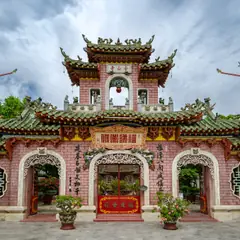
On the upper floor, the front balcony looks out over the street, and from there Trần Phú can be read as an archaeological site. The museum’s rooms are organised by specific places in Hoi An and its coast: the Cù Lao Chàm wreck, the Triều Châu congregation hall, Thanh Chiếm–Thanh Hà, house 129 on Phan Châu Trinh, house 85 on Trần Phú and the Đình Cẩm Phô. Many of those fragments came out of neighbouring houses and halls.
Others came from the street itself. The trenches opened in 2006 under the pavements and roadway of Trần Phú brought to light fragments of 17th-century Japanese Hizen bowls along the whole stretch from the east of Chùa Cầu to the Phước Kiến hall. The ground visitors tread on the way to the museum still holds the remains of that traffic.
And the sea has not finished giving pieces back either: it is told that in December 2013 a fishing boat docked at Đà Nẵng with three coral-covered stoneware jars, tangled in the net off Cù Lao Chàm along with the seafood. What that episode says about the old ceramics route closes the audio guide’s tour from the balcony.