Memory of the Armed Conflict
House of Memory Museum Audio Guide (Museo Casa de la Memoria)
Beside the stream where Medellín was born, a tunnel-shaped building that descends from darkness into light keeps the memory of the armed conflict as told by its victims: mirrors, photographs turned by hand and thirteen wooden boxes that speak only into the ear.
- 75 min of audio
- Free admission
The House of Memory Museum was born in 2006 from the demand of the victims of the armed conflict, who asked for a place to tell what had happened, as an initiative of the Medellín Mayor's Office Victims Assistance Programme. Its 3,619 m² building, designed by the team of the architect Juan David Botero, was conceived as a tunnel: a descending route that recreates the passage from darkness to light, wrapped in a folded double skin that serves as an air chamber to ventilate it.
It is the most visited public museum in Medellín, with about 155 people a day, free admission and, in the first half of 2022, more than half of its visitors coming from abroad. And yet it is half-finished: in 2022 50 % of its structure was still to be built, the second phase planned in the initial project, with an educational non-repetition component that was never raised.
Highlights
- «Susurros» boxes — 13 wooden boxes hung on a wall, each with a testimony heard only by bringing the ear close
- «Ausencias» mirror wall — fragments of testimonies about what was lost, in which visitors see themselves reflected
- Rotating triptychs — some 50 photographs by Jesús Abad Colorado, Natalia Botero, Albeiro Lopera and Steven Ferry turned by hand
- Facade mural — 12 metres high, on forced disappearance in eight countries, crossed by a red thread
- «Tree of Life» — a sculpture by Leobardo Pérez made from weapons handed in across the neighbourhoods, in Parque Bicentenario
In Medellín there is a museum that is not contemplated from afar. To understand it, one has to come close: look into a mirror, turn a photograph by hand, press an ear to a wooden box. The House of Memory Museum was created in 2006 because the victims of the armed conflict demanded a place to tell what had happened to them, and the idea took shape as an initiative of the Mayor’s Office Victims Assistance Programme. During Alonso Salazar’s term the project entered the Development Plan and went through a broad public consultation, with academics, artists, organisations of victims, women and young people, businesspeople and journalists; from that conversation also came its name, «Casa de la Memoria».
Not even the date it opened its doors has a single version: depending on the source, the opening to the public is placed in 2011, 2012 or 2013. What is clear is its place. The museum is part of Parque Bicentenario, built by the Empresa de Desarrollo Urbano to commemorate 200 years of Colombian independence, and its building, a 3,619 m² facility by Juan David Botero’s team, descends like a tunnel from shadow towards light. Inside, the permanent hall «Medellín: memories of violence and resistance» gathers 16 museum experiences and more than 100 digital devices.
The history of the House of Memory Museum, the architecture of its tunnel building and what to see in the park and the halls are the thread of the audio guide, documented and checked against historical sources, that accompanies the route from the stream bank to the last box that whispers. It is a place to be visited with respect: what it tells belongs to people who lived it.
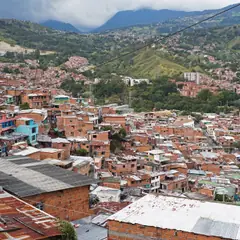
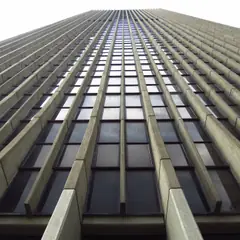
Part of the memory its halls keep was written on the slopes of Comuna 13, to the west of the city; a little over a kilometre away, downtown, the Coltejer Building recalls the other face of twentieth-century Medellín, that of the textile industry.
The tree made of weapons beside the stream where Medellín was born
Parque Bicentenario
Summary of this stop
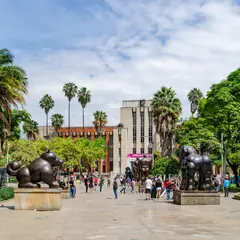
The route begins outdoors, in a park that seems calm. Parque Bicentenario created 21,620 m² of public space to recover the Santa Elena stream, the watercourse on whose banks the city’s first settlements arose. Bridges and paths now accompany the water that saw Medellín born.
In that same landscape stands the «Tree of Life», a sculpture by Leobardo Pérez in tribute to disarmament. Its raw material is not cast bronze: it is weapons collected in disarmament processes in Medellín neighbourhoods, turned into trunk and branches. The park thus works as a first room of the museum, without walls.
Which weapons ended up in that tree and what it means to plant it beside the founding watercourse is something the narration reveals right there, on the stream bank.
Two memories facing the reflecting pool
Parque Bicentenario reflecting pool
Summary of this stop
In front of the museum stretches the sheet of water of the park’s esplanade. On 3 December 2019 the National Army installed before that reflecting pool a sculpture of two soldiers wielding weapons, as a tribute for the 200 years of Independence, and the placement immediately set off protests on social media. Neighbours and organisations questioned placing an armed military monument before the victims’ museum; the museum presented it as an institutional tribute for the Bicentenary, and the historian Marta Villa attributed the uproar to a lack of information about its meaning.
According to chronicles of the time, the statue, part of the monument «Héroes de la libertad» by the master Julio Cortez and Major Jorge Orduz, which represents the soldier of old and today’s soldier, did not stand for even a year. In September 2020, during a protest against a police action in Bogotá, demonstrators destroyed it and left it in flames, and its removal provoked a reaction from the Esmad riot police. The next day the Army itself cleared the remains. In October 2020 its restoration began.
One of its pieces, the figure called «Gesto humano», was meanwhile kept at the Fourth Brigade’s battalion. What that figure was made of, and why that detail connects with what is remembered on the other side of the water, is told at this stop.
A painted wall at the entrance of a half-built building
Facade mural
Summary of this stop
Before the facade, the museum reads as a threshold. In February 2026 it unveiled a mural 12 metres high by 7 wide on forced disappearance in eight Ibero-American countries: flowers, birds, trees, butterflies and keys, crossed by a red thread. Colombia is represented by the sirirí.
Behind that painting begins the tunnel building, designed by the team of the architect Juan David Botero as a descending route that recreates the passage from darkness to light. Its folded double skin is not just a formal gesture: it serves as an air chamber to ventilate the interior.
The tunnel promises light at the end, but the building is still incomplete. In 2022 half of its physical structure remained to be built, the second phase planned from the initial project, with an educational non-repetition component. Marta Inés Villa maintains that under Federico Gutiérrez’s mayoralty the museum lost its link with social organisations and went six months without a director, while the Mayor’s Office included the second phase in the strategy «Medellín abraza su historia» without carrying it out. What that missing half would have housed is one of the keys of the story.
Mirrors of absence and photographs turned by hand
«Ausencias» mirror wall
Summary of this stop
The permanent hall opens with «Ausencias»: a mirrored wall with fragments of testimonies about lost loved ones, homes, land and animals, in which visitors see themselves reflected among the words. It is the first of 16 museum experiences, supported by more than 100 digital devices; between July and 30 September 2022 the hall had to close because an air-conditioning failure put that equipment at risk.
Further on, the space «Múltiples rostros de la violencia» gathers some 50 photographs by Natalia Botero, Jesús Abad Colorado, Albeiro Lopera and Steven Ferry, mounted in triptychs that visitors turn by hand. Nearby, a large interactive timeline runs through the history of violence in Colombia from 1946, with episodes such as the creation of the FARC-EP or the peace processes.
These walls have also hosted gestures of reparation. On 9 February 2023, in the museum’s main auditorium, retired colonel Jaime Humberto Pinzón Amézquita, who between 2005 and 2006 commanded the Atanasio Girardot Infantry Battalion No. 10 in Medellín, handed to families of victims of extrajudicial executions from Medellín and Cali the Medal for Military Merit he had received for operations the JEP established as «false positives». It was received by Alexander Castro, a victim and participant of the Corporación Tejiendo Memorias. How that episode changes the way the hall’s photographs are seen is left for the narration.
Thirteen boxes that speak only into the ear
«Susurros» boxes
Summary of this stop
In the «Susurros» space, 13 wooden boxes hang from a wall. Each holds a different testimony of the violence, and it is heard only by bringing the ear close: the noise of the world fades until a single voice remains. Very near, the panel «Palabras de niños» gathers how the youngest define words such as love, fear, death or displacement; a nine-year-old defined murder as «taking the best from a person».
Those voices are part of a larger archive. Since July 2026 the museum’s Memory Laboratory offers 1,473 records gathered since 2003, among them 359 testimonies of civilian victims and members of the security forces, which can only be consulted in person at the site. The museum also has its disputed silences: the historian Jimena Perry has pointed out that the permanent exhibition barely mentions the victims of drug trafficking and the Medellín Cartel.
The museum also holds the Recinto de la Memoria, the room that since 2013 has projected without interruption family photographs of disappeared people in everyday moments, renovated in August 2026 with 60 screens. There, in May 2019, during the tour of his Bach Project, Yo-Yo Ma offered a piece to survivors and relatives of victims. What that intimate concert among portraits of birthdays and outings meant is the close of the route.