Canal of theatres and neon
Dotonbori Audio Guide
A canal paid for by merchants in 1612 that became Osaka's great theatre district and is now its showcase of mechanical crabs, clowns and neon. Four centuries of putting on a show to attract customers.
- 60 min of audio
- Edo theatre district
The history of Dotonbori begins in 1612, when four contractors, Hirano Tōji, Nariyasu Dōton, Yasui Jihei and Yasui Kyūbei, began digging the canal with their own money, with no public funds. Dōton died in the siege of 1615 with the work half done, and his partners finished it that November. In 1626 Yasui Kyūbei obtained permission to move the theatres of Kanshirō-chō to the bank, and by 1662 the street held six kabuki theatres, five jōruri, four dance, seven Buddhist-recitation and one karakuri automata theatre.
The plan of that district still lies beneath the neon. The theatres stood on the south side of the street and the theatre teahouses on the north side, toward the canal; that is why entertainment is concentrated to the south today and restaurants to the north. The stages fell one by one until on 26 May 2026 the Osaka Shōchikuza, the last kabuki theatre, closed.
Highlights
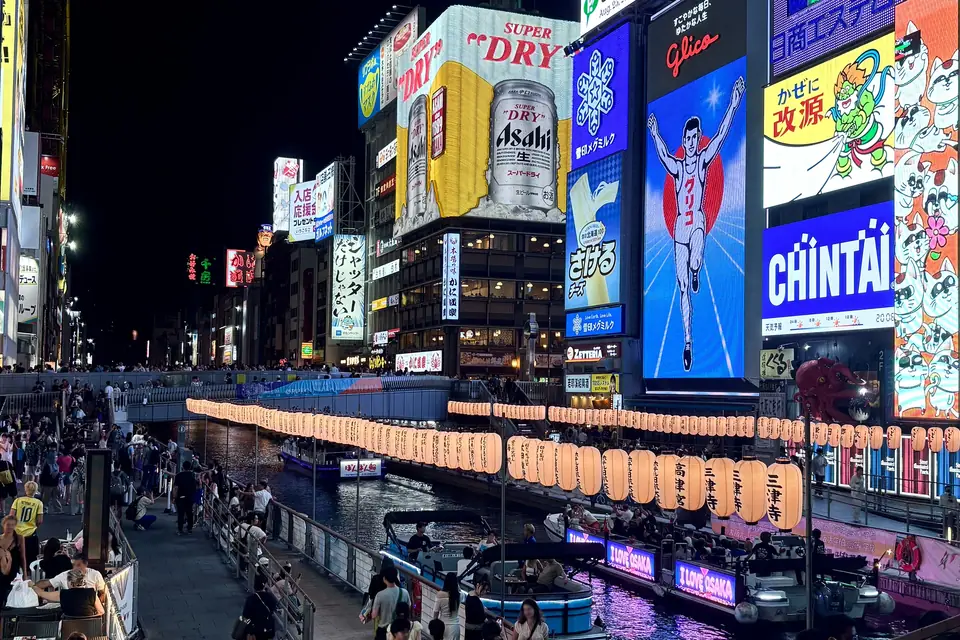
- Glico sign — the runner with raised arms, installed in 1935 and now in its sixth version
- Kani Dōraku crab — about 6.5 m of legs and moving eyes since 1962
- Mizukake Fudō — the moss-covered statue that survived the 1945 bombing
- Ebisubashi Bridge — the old “puppet bridge” and the spot for jumps into the canal
- Tonbori River Walk — about 2 km of waterside promenade facing the signs
Dotonbori is the street where Osaka has been putting on a show for four centuries. First came the theatres, which numbered more than twenty; then the tables, the three-dimensional signs and the neon that is now reflected in the canal. Not even its founder escapes the spectacle: the 1915 stele and the official tourism listing call him Yasui Dōton, but the research of Sako Keizō, between 1928 and 1936, identifies him as Nariyasu Dōton, of the Nariyasu family of Hirano, and the city of Osaka treats “Yasui Dōton” as a fictitious figure. There is no agreement on the canal’s name either: a memorial of the fifth Yasui Kyūbei attributes it to a decision of the lord of Osaka to honour the dead Dōton, who had no heir, while a diary already writes “Dōtonbori-suji” on 1 December 1614, before the work was finished.
What to see in Dotonbori goes well beyond the photo with the Glico runner. Before the great theatres, the street knew the forbidden forms of early kabuki: the courtesans’ kind, banned, and from 1633 the wakashu kabuki of boys brought by Shioya Kurōemon of Kyoto, whose name probably survived in the Kurōemon-chō district. In 1652 a brawl between samurai broke out in his theatre and that same year boys’ kabuki was banned too; the following year, Murayama Matabei obtained permission to reopen with adult actors. The saying “Ōsaka no kuidaore”, “Osaka ruins itself by eating”, was already in circulation in the late Edo period, long before the restaurant that took it as its name in 1949.
The water has its history too. In the 1940s of the Shōwa era, between 1965 and 1974, the canal averaged more than 30 mg/L of BOD; after the sluice gates of 2000 and the promenade built between 2004 and 2013, it fell to an average of 1.8 mg/L between April and September 2014.
The audio guide covers the canal in six stops, from Nipponbashi Bridge to Ebisubashi and the riverside walk, with documented narration checked against historical sources.
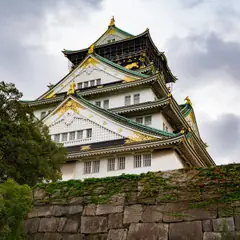
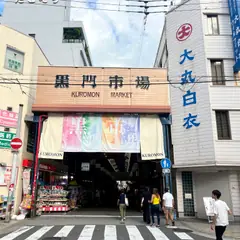
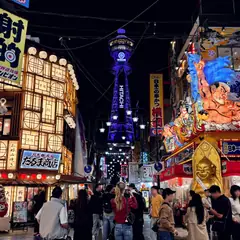
That reputation for gluttony continues very close by, next to Nipponbashi, in Kuromon Market, where Osaka’s cooks bought their fish, and the neon has its echo further south in Shinsekai, the entertainment district of 1912 at the foot of the Tsutenkaku. Osaka Castle lies about three kilometres to the northeast.
The founder’s stele with a disputed name
Yasui Dōton and Yasui Dōboku stele
Summary of this stop
On the northeast corner of the north Nipponbashi crossing stands a stone monument of 1915 bearing the name Yasui Dōton, the very name historians consider mistaken. In the Dōtonbori trial, which ran from 1965 to 1976, the descendants of Yasui Kyūbei claimed the canal bed; the ruling dismissed the suit and found the Nariyasu thesis sound. Opposite, another stele records a poem by Ono Tōzaburō about the river.
What the stone does not say is that the canal was born as a private business, dug from 1612 with the money of four contractors. Nariyasu Dōton shut himself in Osaka Castle with the Toyotomi side, defended the reed beds of Dōtonbori and died in combat on 7 May 1615 with the canal unfinished; Hirano Tōji and Yasui Kyūbei completed it that November. Why a businessman ended up fighting beside the Toyotomi is what the narration raises before the stele.
A clown where the Nakaza burned
Kuidaore Tarō
Summary of this stop
In front of the Nakaza Kuidaore building, a drumming clown doll dressed as a touting street musician, Kuidaore Tarō, has been greeting passers-by since 1950. It occupies the site of the Nakaza, one of the Five Theatres of Dōtonbori, which operated from 1661 to 31 October 1999. On 9 September 2002, in the middle of demolition, a mistaken cut of the main gas pipe caused an explosion that burned the building and part of the Hōzenji alley, with no deaths. A theatre of 1661 turned into a food building sums up the street’s history.
The loss has a legend. According to a documented tradition, the tanuki Shibaemon, from Awaji island, crossed to Osaka disguised as a man to see a Nakaza play, paid for his ticket every day with leaves turned into gold coins and ended up discovered by a dog and beaten to death. The theatre emptied, a curse was talked of and it ended up venerating him beneath the stage. What the city asked itself when the old theatre burned in 2002 is the closing touch the narration keeps for this point.
The green Fudō that survived the fire
Hōzenji Temple
Summary of this stop
A step away from the noise, the cobbled alleys of Hōzenji, about 80 metres by 3, hide old restaurants and, to the west, a statue of Fudō completely covered in green moss. In the first great bombing of Osaka, on 13 and 14 March 1945, the whole Hōzenji temple burned except this image, the Mizukake Fudō.
Its colour is owed to the water worshippers pour over it. It is said that the custom began in the postwar years, when a woman gathered the offering water in her hands and poured it over the image. Today the ritual follows a precise order of ladles for the Fudō and his two attendant boys, and what is asked for is health, good business and finding a partner. What that order is, and what is done when the bucket runs empty, the narration explains beside the well.
Theatres to the south, food to the north
Kani Dōraku
Summary of this stop
In front of the Kani Dōraku restaurant, opened on 1 February 1962, a mechanical crab of about 6.5 metres moves its legs and eyes on the facade. Its success set off a wave of imitations of three-dimensional signs, and a few steps away the scowling chef of Kushikatsu Daruma, the place that spread the rule of never double-dipping the skewer in the shared sauce, follows the same school.
From here the street stops looking like chaos and reads like a plan of the Edo period: theatres on the south pavement, teahouses on the north one, toward the canal, where wealthy merchants arrived by boat at the door of the chosen venue. How the crab fits into that old war of attention-grabbing signs is what the narration deciphers before the facade.
Ebisubashi, the old puppet bridge
Ebisubashi Bridge
Summary of this stop
The present Ebisubashi Bridge, from 2007, has a circular plaza in the middle and reuses under the deck the triple-window railings of the 1925 bridge. At its south end stood the Takemoto-za, the jōruri puppet theatre where Chikamatsu Monzaemon’s “Sonezaki Shinjū” premiered in 1703, and in the golden age of jōruri the bridge was nicknamed Ayatsuri-bashi, the “puppet bridge”.
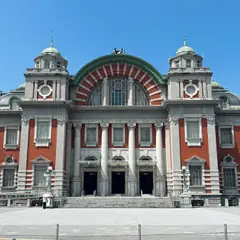
From here kabuki actors arriving by boat amid confetti were also acclaimed, in the funa-norikomi that was revived in 1979 after 55 years of silence, bound for the Shōchikuza, the 1923 theatre with a terracotta facade inspired by La Scala that dropped its curtain on 26 May 2026. And from this railing Hanshin Tigers fans have leapt into the canal since the 1985 title: a drop of about 6 metres onto some 3.5 of water, a jump that cost one of them his life in 2003. What a young actor answered from the boat in 2022 is the nod the narration reserves for the bridge.
The canal that gave the Colonel back
Tonbori River Walk
Summary of this stop
The closing stop goes down to the Tonbori River Walk, the promenade of about 2 kilometres at water level facing the Glico sign. The runner with raised arms was installed in 1935 at 33 metres high, taken down in 1943 so its metal could be requisitioned and is now on its sixth version, from October 2014 and with about 140,000 LEDs; Ezaki Glico announced that this sixth sign will be switched off at the end of November 2026 and that the seventh will debut in spring 2027. Who inspired the runner is debated: it is attributed to the Filipino sprinter Fortunato Catalon, but the company maintains it has no specific model.
In this same canal the statue of Colonel Sanders spent 24 years after fans threw it into the water on 16 October 1985 for its resemblance to the player Randy Bass. The supposed curse that sank the Tigers is an urban legend born on television in 1988. Where and how the statue finally turned up is the last scene the narration tells facing the lights.