UNESCO World Heritage
At-Turaif District Audio Guide
A Najdi adobe citadel on the edge of Wadi Hanifa, from which the first Saudi state ruled until 1818. A siege emptied it for more than a century, and its walls, restored today, still bear the marks of the impacts.
- 120 min of audio
- Najdi adobe architecture
At-Turaif, in Diriyah, on the outskirts of Riyadh, was the seat of government of the first Saudi state under the imams Abdulaziz, Saud and Abdullah. Its adobe palaces of three and four floors, taller than wide, with almost plain facades and triangular ventilation windows, are the great example of the Najdi style. In July 2010 UNESCO inscribed it as a World Heritage Site, the second Saudi site on the list after Hegra.
In 1818 Ibrahim Pasha's troops besieged the city, bombarded it from the top of the hill and, after the surrender of Imam Abdullah bin Saud, Muhammad Ali ordered it razed and burned. Its inhabitants left for Riyadh and Diriyah lay abandoned for more than a century, until some families returned in the mid-20th century. Since December 2022 the district has been open to the public as an open-air museum.
Highlights
- Salwa Palace: the seat of the first Saudi state, seven adobe units overlooking Wadi Hanifa
- Imam Muhammad bin Saud Mosque: the largest in Najd in its day, scene of the 1803 assassination
- Sabalat Mudhi: the free hostel for caravans and students that bears a woman's name
- Thunayan bin Saud Palace: a blind prince's library and a cannon embrasure
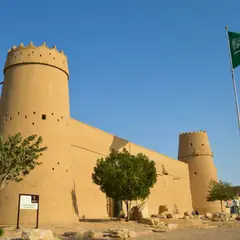
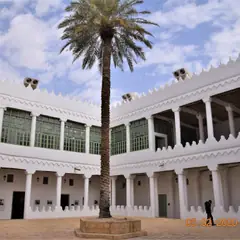
- Najdi walls: triangular windows, crenellated tops and impact marks from the 1818 siege
On a plateau overlooking the bed of Wadi Hanifa, on the outskirts of Riyadh, stands the mud capital from which Saudi Arabia emerged. The history of At-Turaif is that of a city that ruled for well over half a century, from the Salwa palace, the Arabian Peninsula; that saw one of its imams fall assassinated in the middle of prayer and that, in 1818, withstood Ibrahim Pasha’s siege until the surrender. Then came looting, fire and more than a hundred years of abandonment.
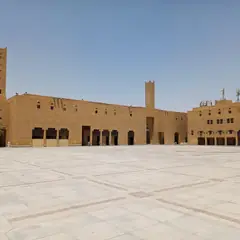
The founding chronology is not unanimous. UNESCO dates the site to the 15th century, while other sources place the construction of the district in the mid-18th century, when it became the seat of power, and the Saudi capital’s start is 1727 according to some and 1744 according to others. What nobody disputes is its architecture: that of At-Turaif is Najdi in its pure state, with multi-storey adobe palaces, thick exterior walls, almost plain facades, small triangular ventilation openings and crenellated tops on the rooftops.
In July 2010, at the 34th session of the World Heritage Committee held in Brasilia, the district entered the UNESCO list: 28.78 hectares inscribed and a buffer zone of 237.95. Since December 2022 it has been visited as an open-air museum, among restored ruins, walkways and small museums installed in the former palaces.
What to see at At-Turaif fits into a walk of five stops, from the bridge over the wadi to a blind prince’s palace. The audio guide covers it with a documented narration checked against historical sources, and at each point tells who raised those walls, who defended them and who was left out of the story.
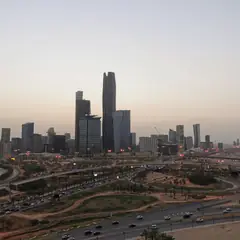
The history that begins here continues in Riyadh: at the National Museum of Saudi Arabia, which traces the history of the peninsula up to the founding of the kingdom, and at Masmak Fortress, where Abdulaziz recovered the city in 1902. To see the capital’s other face, the glass one, there is King Abdullah Financial District.
The edge of the wadi and the market that hummed
Footbridge over Wadi Hanifa
Summary of this stop
The route begins where the district is reached today: the curved 75-metre footbridge that spans Wadi Hanifa from al-Bujairi. Below, the green valley of palm groves; above, the dry city of mud. According to the traditional explanation, the name Turaif comes from “taraf”, edge, because the district occupies the western end of the wadi, on the highest of the three promontories of old Diriyah.
That valley was not always silent. In the time of Imam Saud bin Abdulaziz, the chronicler Ibn Bishr climbed to a high point between Turaif and al-Bujairi to take in the wadi market at a glance. He described it as stretching as far as the eye could see, with men and women in separate areas, and with no sound other than a murmur “like the humming of bees” and the “I sold and I bought” of the deals.
From the bridge the city’s height above its oasis can be grasped. What that market says about the power concentrated up high is what the narration reveals as you begin to climb.
Salwa, a palace called solace
Salwa Palace
Summary of this stop
The district’s largest complex occupies its eastern part, overlooking the wadi: the Salwa palace, seven adobe units of varying heights built in phases, with reception halls, the imam’s residence, state offices and a mosque of its own. According to the most cited source, Imam Abdulaziz bin Muhammad raised it from 1765 and it was for four decades the seat of government of the first Saudi state, although other sources attribute it to Muhammad bin Saud or date the work to 1776, and its area ranges from about 10,000 m² to “at least 5,000”. Today the Diriyah museum occupies units 5 and 6, and a walkway runs through the restored ruins.
The facades tell how people built in Najd: palaces of three or four floors, taller than wide, with thick exterior walls and almost plain walls, opened only by triangular ventilation windows. In the neighbouring palace of Saad bin Saud the exterior walls reach 120 centimetres and the interior ones between 40 and 60. On this same facade, at nightfall, the light and sound show about the first Saudi state is projected today.
Inside, Saud bin Abdulaziz received the public after the midday prayer in a hall held up by about 50 columns, with seating on three levels, and at the top of the palace he had a maqsura where only his scribes entered to put his decisions in writing. Beside it he ordered the opening of Qu’ al-Sharia, a large courtyard with room for about 3,000 men, which gives its name to the street of today’s visitor centre. The palace is called Salwa, solace or consolation: according to the traditional explanation, because of the variety of its uses, as if it entertained whoever lived there and took away their worries. What echo that name has before ruins abandoned after 1818 is the reflection the narration keeps for this facade.
The mosque of the assassination and the cannons
Imam Muhammad bin Saud Mosque
Summary of this stop
Adjoining Salwa, at the entrance to the district, rises the great Turaif mosque, that of Imam Muhammad bin Saud: about 2,000 m², the largest in Najd in its day. On Fridays it filled so much that worshippers overflowed into the palace mosque, and Saud bin Abdulaziz built a bridge on the upper floor to join the two buildings. At its southwest end a small stone mosque was raised later.
This same building was the scene of a crime. In November 1803, shortly after the capture of Mecca, Imam Abdulaziz bin Muhammad was assassinated while leading the asr prayer. The most widespread version blames a dervish avenging his children, killed in the Saudi sack of Karbala in 1802; the London Times of March 1804 told another story, with the imam stabbed in his tent.
Fifteen years later, the mosque was also a trench. In early September 1818, while Ibrahim Pasha bombarded from the top of the hill the palace where Imam Abdullah bin Saud had taken refuge, he took the cannons out of the arsenal, which had come to hold 60 pieces, hauled them onto the mosque’s roof and answered from there. How one and the same roof went from overflowing Fridays to Diriyah’s last fire is the thread of the narration before its walls.
Mudhi’s hostel and a forgotten sentence
Sabalat Mudhi and its mosque
Summary of this stop
Southeast of Salwa, on the old main street, a two-storey building survives: the Sabalat Mudhi, a charitable foundation created by Imam Abdulaziz in the name of his mother, Mudhi bint Abi Wahtan. It offered free lodging to merchants, visitors, students and the needy, with classrooms, stables for the caravans and a small mosque of pointed stone arches attached to the south.
The name points to one of the most debated episodes of Saudi history. When the preacher Muhammad ibn Abd al-Wahhab arrived in Diriyah around 1744, he took refuge in the house of his disciple Ibn Suwailim. In the chronicler Ibn Bishr’s account, it was Mudhi who convinced her husband, the emir Muhammad bin Saud, to receive him: “God has brought this man to you; he is a treasure”. From that meeting came the pact that founded the first Saudi state. The other great chronicler of the age, Ibn Ghannam, tells the scene without mentioning her, and even school textbooks have followed one version or the other.
The Sabalat’s mosque also holds the end of the story. When families returned to Diriyah in the mid-20th century, they restored mosques like this one with their own hands, rebuilt again in 2018. Who really convinced the emir is the question the narration poses in front of the hostel.
Thunayan, the blind prince and the embrasure
Thunayan bin Saud Palace
Summary of this stop
At the district’s southwest end, overlooking the Hubaykir ravine that runs down to Wadi Hanifa, stands one of Turaif’s largest palaces, with stone walls instead of adobe. It belonged to Thunayan bin Saud, brother of the founder Muhammad bin Saud and one of his chief advisers. According to documented tradition, he lost his sight but did not stop studying: he gathered a great library in his palace, bequeathed his books in waqf for students and had himself read to aloud. In its southwest wall an embrasure was opened for the cannon that covered the ravine during the 1818 attack.
From this viewpoint the fall can be understood. Ibrahim Pasha’s troops reached Diriyah on 22 April 1818 and Abdullah bin Saud asked to surrender on 9 September; Muhammad Ali broke the pact, ordered the city razed and burned, and the imam was taken to Istanbul and beheaded. How far the destruction went is still debated: some sources speak of a district razed completely, others of buildings that stayed standing thanks to their solidity. The residents left for Riyadh, where Turki bin Abdullah established the new capital in 1824.
The last chapter is restoration. As early as the 1970s work was done with the original materials, and the Diriyah Gate Development Authority, created in 2017, avoids the sacrificial re-plastering usual in adobe so that old walls are not confused with new ones. Even so, ICOMOS once recommended deferring the inscription and asked for more conservation and less reconstruction, and some visitors find the restoration excessive. Which wall is old and which new is the question with which the narration closes the route.