Historic Arctic pub
Ølhallen Audio Guide
A cellar licensed to serve beer for a single year, opened on 29 February 1928 amid teetotallers and debts: almost a century later, the oldest pub in Tromsø still keeps the memory of the Arctic trappers and hunters.
- 40 min of audio
- Arctic history
Ølhallen occupies the cellar of the yellow house at Storgata 4, the former residence of the director of the Mack brewery, finished in 1890 to a design by the architect Lars Solberg. Until 1927 there was no place in Tromsø where beer could be served, and the council authorised it only after several attempts and with a one-year licence. For decades it was the first stop of the trappers coming back from overwintering on Svalbard and a men-only territory.
In a corner of the room a stuffed polar bear without claws keeps watch, said to have been shot by Henry Rudi, the “king of the polar bears”, who killed 713 over 27 winterings and spent much of his retirement at these tables telling his adventures. Today, beside the bear, a wall of 72 taps of Norwegian beer lines up beneath lamps drawn by a refugee who arrived in 1939.
Highlights
- Yellow house at Storgata 4 — the director's residence of 1890, by Lars Solberg, above the pub's cellar
- Stuffed polar bear — said to be one of Henry Rudi's, hunter of 713 bears over 27 winterings
- Wall of 72 taps — beers from Mack and other Norwegian breweries behind a long bar
- Vaulted room — brick, ceramic tiles and furniture and lamps by Franz Wozak
- Microbrewery behind a glass wall — what remained at Storgata 4 when the factory left in 2012
The story of Ølhallen begins long before its first pint. In 1877, the baker Ludwig Mack, trained in Bremen and Braunschweig and a confectioner in Hamburg, founded a brewery on the southern edge of Tromsø, convinced that beer, weaker than spirits, would lower the alcohol the working class drank. Five decades of tug-of-war with the temperance movement followed, three municipal votes and a single point of sale in the whole city, until on 13 December 1927 the council finally authorised an on-premises venue, with a licence valid for one year. Ølhallen opened on 29 February 1928 in the cellar of Storgata 4 and has been the oldest pub in Tromsø ever since: a refuge for fishermen, trappers and bear hunters, a room without women until the late 1960s and, since 1972, a meeting place for students and teachers. Anyone asking what to see at Ølhallen finds a vaulted room with a stuffed polar bear, portraits of Arctic figures, long wooden tables and a wall of 72 taps. The audio guide walks around the outside of the brewery complex and through the room inside, with a story researched and checked against sources.
The memory of Henry Rudi and the trappers who drank at these tables is completed at the Polar Museum, and 400 metres away Tromsø Cathedral sums up the wooden Tromsø of the 19th century.
A brick house against spirits
Ølhallen
Summary of this stop
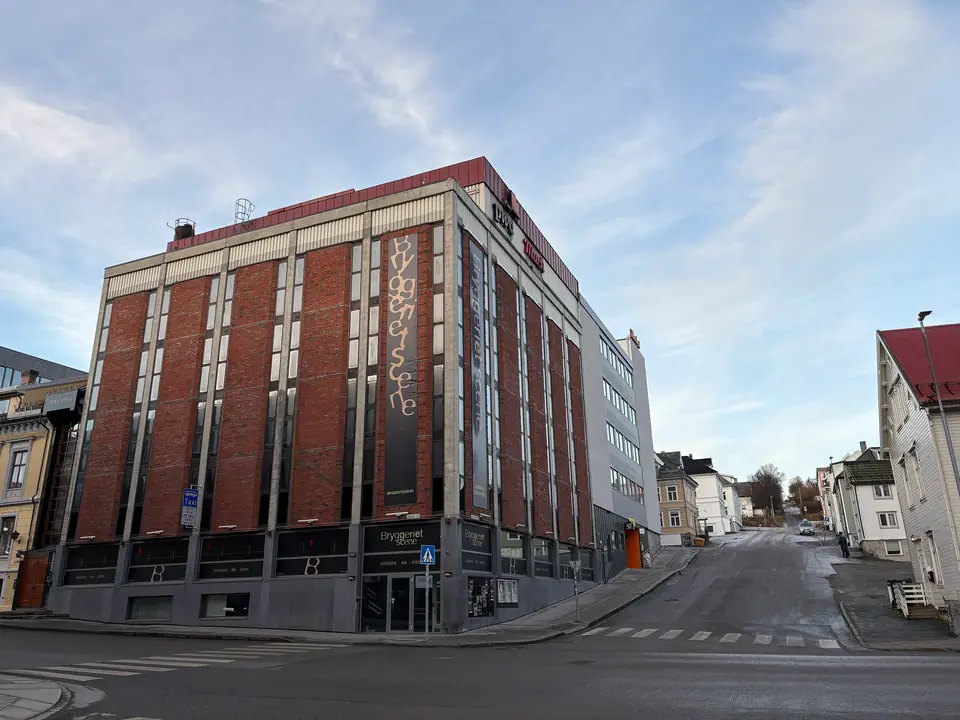
From Storgata, the Mack complex reads as a baker’s dream. The brewery building, raised in the summer of 1877, was the first brick house in Tromsø, built at the same time as the Norges Bank headquarters. The yellow facade that now holds the pub in its cellar is the old director’s residence, finished in 1890 and designed by Lars Solberg, the Trondheim architect who also signed the old museum building of 1894 in the neighbouring Museumsparken. Alongside rise the brewery’s industrial sheds and a covered footbridge crossing the street to the administrative wing, and nearby stands the founder’s bust, the work of the sculptor Nina Sundbye.
That architecture was born in the middle of a war on alcohol. Tromsø voted three times, in 1897, 1907 and 1913, on whether to abolish the Samlaget, the company that sold spirits, and the teetotallers lost all three; the last by only nine votes. The irony of the period is that Mack himself had sat since 1877 on the board of that very company. How all this fits into the history of Ølhallen is told in front of the facade, starting with how close the city came to going dry.
A one-year licence in the worst year
Microbrewery glass wall
Summary of this stop
The pub was born on a tightrope. Until 1927 the brewery was the only place in Tromsø where beer was sold, and local politicians, firm supporters of abstinence, blocked for years any venue where it could be served. The licence came with an expiry date, a single year, and the venue opened on a leap day, 29 February 1928, in the old sales office in the cellar.
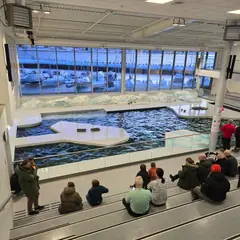
That was also the brewery’s worst year. In 1928 the ministry telegraphed that it would demand its closure if it did not immediately settle its beer-tax debts; the director Lauritz Bredrup negotiated a deferral and paid the last instalment on 15 July 1931. South of the old building, a glass wall of 2002 now lets one see the microbrewery that links the house of 1890 with the production sheds. It is what remained at Storgata 4 when, in 2012 and after 137 years, Mack moved all its production to Nordkjosbotn, in Balsfjord, while Ølhallen, the Kjeller 5 shop and the administration stayed in the old buildings.
The bear of the king of the bears
Stuffed polar bear
Summary of this stop
Beneath the vaults, the corner with the stuffed polar bear sums up the room’s past. For trappers and hunters, Ølhallen was the first stop on coming back from overwintering on Svalbard or from months on the Arctic Ocean, and that community dominated the clientele until its decline in the 1960s and 1970s. It was also an exclusively male territory: there was no women’s toilet, and a wife looking for her husband had to stay on the pavement and ask a passer-by to go in and give him the message.
The most famous regular was Henry Rudi, the Isbjørnkongen or king of the polar bears, who killed 713 bears and totalled 27 winterings on Hopen, Jan Mayen, Svalbard and Greenland up to 1948. He spent much of his retirement at these tables telling his adventures, called the trapper’s life “the real life” and maintained that his hardest winters had been those in Tromsø. By local custom, the pub keeps a corner table for him, and it is said that the clawless bear keeping watch nearby, surrounded by Arctic portraits, is one he shot himself and gave to the venue. What truth there is in that pairing of hunter and prey is discovered in the room itself.
Seventy-two taps beneath a refugee’s lamps
Wall of taps
Summary of this stop
Before 1928, this cellar was a storeroom with an earth floor and a low ceiling. After several refits, the last in 1972, the room shows vaults, brick walls, ceramic tiles and a long bar that dominates it. The furniture, rough and sturdy, and the lamps were designed by Franz Wozak, who came to Norway as a refugee in 1939, the son of a master brewer from Trieste, who knew the great breweries of Europe first-hand. Behind the bar lines up the wall of taps: 72 Norwegian beers, from Mack and other breweries in the country, according to the brewery itself, though some guidebooks count fewer.
The clientele changed with the city. At the end of the 1960s teacher-training students and nurses from a nearby residence arrived, and the refit of 1970-1971 finally brought a women’s toilet, remembered as the venue’s greatest revolution, though another version holds that the new toilets were for the men. With the university, opened in 1972, came students and teachers, and in Tromsø the joke goes that more than one thesis ended up at the bottom of a mug of bayer. The regulars’ Blanding, two parts dark Bayer to one of Pilsner, links back to Mack’s first beer, a bayerøl put on sale on 17 May 1878. The Friday-afternoon ritual, when half the city closes the week here, is left for the end of the route.