UNESCO heritage
Plaza de Armas of Cusco Audio Guide
Beneath Cusco's main square lies a far larger one: the Inca Huacaypata, won from a marsh and covered with sand brought from the coast, where the Spanish raised churches over palaces and executed both Túpac Amarus.
- 30 min of audio
- Inca ceremonial square
The Plaza de Armas of Cusco covers only part of the great Inca ceremonial square, the point where the roads of Tawantinsuyo came together and the main axis of the Qhapaq Ñan. The Inti Raymi, the Cápac Raymi and the Huarachicuy were celebrated here, and victorious armies entered with their spoils. Around it rose the palaces of Pachacútec, Huayna Cápac and Viracocha Inca, on whose sites the Cathedral, the Church of the Society of Jesus and the Portal de Panes were later built. At 3,400 metres above sea level, it is part of the historic centre declared a World Heritage Site in 1983.
The ground hides the most unusual story: a marsh between two streams that Sinchi Roca filled with earth from the mountains and that Pachacútec finished drying with sand from the coast. In 1545 that beach sand was removed to build the Cathedral, and in 1555 building was authorised in the middle of the square, which was split in three. Beneath Calle del Medio the Saphy river, which divided it into two sectors, still runs, covered over.
Highlights
- Inca ground won from a marsh and covered with sand brought from the coast, removed in 1545 to build the Cathedral
- Cathedral atrium, where in 2018 a georadar detected a 175 m² structure that may be the Inca ushnu
- Setting of the executions of Túpac Amaru in 1572 and of Túpac Amaru II in 1781
- Saphy river, which split the Inca square in two and still runs piped beneath Calle del Medio
- Fountain with the 2011 fibreglass Inca and the rainbow flag born in 1973 at a radio station
Cusco’s main square measures 155 by 95 metres today, but it is only a fragment. The Inca square that preceded it also took in the present Plaza Regocijo, the old Cusipata, and the blocks that stretch between the streets Espaderos, del Medio and Mantas. Not even its Quechua name is settled: María Rostworowski, following González Holguín, proposes Aucaypata, “place of the warrior”; Víctor Angles Vargas argues for Huacaypata, “place of weeping”, against the Cusipata of rejoicing; and the traveller George Squier called it Huacapata, “sacred place”, in 1863.
Each era left its layer here. In May 1536, during Manco Inca’s siege, some 200 Spaniards under Hernando, Juan and Gonzalo Pizarro were cornered around the square, in the episode that the tradition collected by Inca Garcilaso turned into the miracle of the Sunturwasi: a Virgin who, in that version of the victors, blinded the besiegers with dust fallen from the sky. Soon afterwards the square became a scaffold. According to documented tradition, in 1538 the body of Diego de Almagro the Elder was brought out here to carry out the sentence of beheading, and in 1542 his son, Almagro the Younger, barely 20 years old, was beheaded in the same place.
Colonial faith also took over the space of the Inca rituals. At Corpus Christi, fifteen images of saints and virgins arrive in procession from different parishes to the Cathedral and circle the square; the festival replaced the procession of the mummies of the Inca rulers and has been Cultural Heritage of the Nation since August 2004. And every June, according to a documented custom, Cusco’s jubilee month opens with an offering to the Pachamama buried at the foot of the flagpoles. Since 2014 the square has also been part of the Qhapaq Ñan, of which it was the main axis.
The audio guide’s route goes from the centre to the four sides of the square, with documented narration checked against historical sources that reconstructs the Inca square still beating beneath the colonial one.
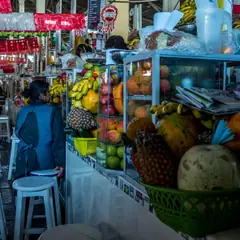
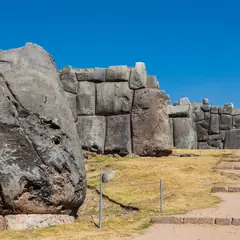
On one of its sides stands Cusco Cathedral, built partly with the sand that covered the Inca square. In the siege of 1536 that trapped the Spanish here, Manco Inca’s bastion was Sacsayhuamán, and everyday Cusco today, the Cusco of juices, broths and Quechua, is found at the San Pedro Market.
An Inca fountain over an old marsh
Golden Inca fountain
Summary of this stop
In the centre of the square stands a republican fountain crowned by the golden figure of an Inca. Beneath it begins the most surprising story of the place: this ground was a marsh between the Saphy and Tullumayo streams. Sinchi Roca filled it with earth from the mountains and Pachacútec finished drying it by covering it with sand brought from the coast, an artificial beach at 3,400 metres above sea level.
On that sand the Inti Raymi, the Cápac Raymi, the Huarachicuy and the main fairs were celebrated. Victorious armies entered the square, displayed their spoils and trampled the prisoners of war. The Inca of the fountain, by contrast, is very recent: it is made of fibreglass, the work of the sculptor Carlos Ordóñez, and was placed in the early hours of 24 June 2011, the day of the Inti Raymi, with the backing of Mayor Luis Flórez García. Its arrival set off a controversy: the Regional Directorate of Culture and defenders of the heritage asked for its removal for breaching the master plan of the Historic Centre and the UNESCO declaration, while the mayor defended it as based on the chroniclers.
The square has never stopped being a ceremonial stage. Every 24 June, the Inti Raymi makes its second stop here, with an altar raised in the centre and a dialogue in Quechua between the actor who plays the Inca and the city’s mayor. What the mayor receives from his hands, and since when that scene has existed, is told when listening to the narration at this very spot.
The Cathedral atrium, between altar and scaffold
Cathedral atrium
Summary of this stop
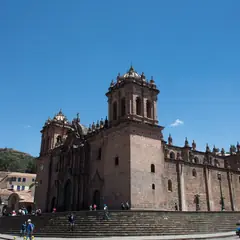
On the northeast side, the Cathedral’s great stone façade occupies the site of Viracocha Inca’s Sunturwasi. Its walls hold part of the square: in 1545 the magistrate Polo de Ondegardo ordered the beach sand covering the ground to be removed and used in building the church.
Something older may lie beneath the atrium. In 2018 a georadar of the Decentralised Directorate of Culture detected under these steps a rectangular structure of 175 m², a candidate for the Inca ushnu that Pedro Cieza de León described in 1553. And right in front, on 24 September 1572, a scaffold draped in mourning was raised where Túpac Amaru, the last Sapa Inca of Vilcabamba, was beheaded before between 10,000 and 15,000 people. Viceroy Francisco de Toledo ordered the execution; Philip II disapproved of it.
That severed head fed an Andean myth. The tradition of Inkarri, the “Inca king”, holds that his dismembered body regenerates underground and that he will restore the order of the world once he is whole. Which part of that king lies, in one of its versions, beneath this very square is the closing note the audio guide keeps for the atrium.
Túpac Amaru II before Huayna Cápac’s palace
Church of the Society of Jesus
Summary of this stop
On the southeast side, the Baroque façade of the Church of the Society of Jesus rises over the Amaru Cancha, the palace of Huayna Cápac. From this point the full ring of transformed Inca palaces can be seen: Pachacútec’s Qasana beneath the Portal de Panes, Viracocha Inca’s Sunturwasi beneath the Cathedral and the Amaru Cancha beneath the Jesuit church.
The square became a scaffold again two centuries later. On 18 May 1781, 209 years after Túpac Amaru I, Túpac Amaru II was executed here after watching Micaela Bastidas and his son Hipólito die. The planned torture failed and the inspector José Antonio de Areche gave a new order. How that day ended, and why the scene repeats that of 1572, is revealed when listening to the narration in front of the Jesuit church.
The street that hides a river
Mouth of Calle del Medio
Summary of this stop
From the square starts Calle del Medio, on the way to Plaza Regocijo. At first glance it is just another street, but the blocks that flank it occupy the old Inca square. In 1555 the magistrate Sebastián Garcilaso de la Vega authorised building in the middle of the Huacaypata; those works produced the blocks between Espaderos, del Medio, Mantas, Heladeros and Espinar, and the great square was split into today’s Plaza de Armas, Regocijo and Espinar.
Beneath the pavement the trace of water continues. The Saphy river, which split the Inca square into two sectors, still runs covered, turned into a sewer, under this street. It is one of the proofs that the present square, with its 28,728 m², is only part of the ceremonial space that was the axis of the Qhapaq Ñan. Exactly how far the original square reached is what this stop helps to sketch out on the ground.
From Pachacútec’s palace to the chain stores
Portal de Panes
Summary of this stop
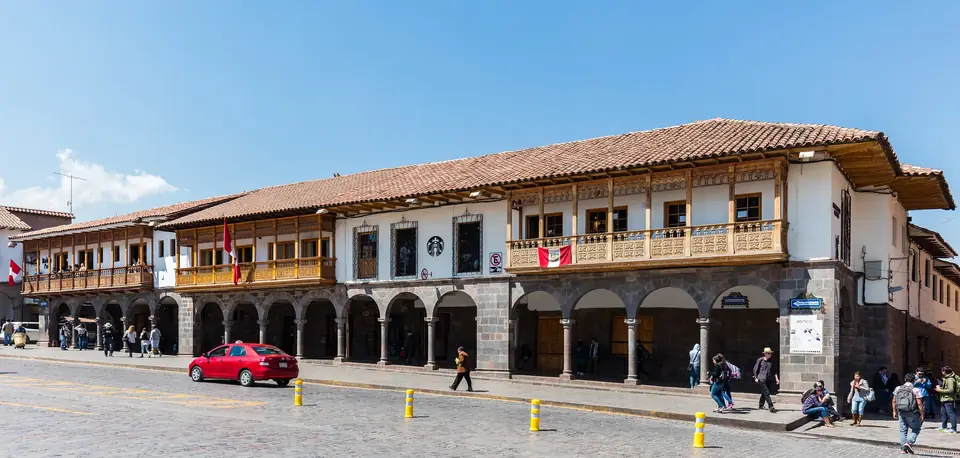
On the northwest side, the colonial arcades of the Portal de Panes rest on the site of the Qasana, Pachacútec’s palace. Today they house restaurants and shops in the city’s most expensive commercial zone: in the first decade of the 21st century, Bembos, McDonald’s, Starbucks and KFC opened their first Cusco branches under these arcades, fitted into the colonial façade.
Over the square flies the seven-stripe rainbow flag, which many associate with Tawantinsuyo. Its origin is less ancient: it was presented in 1973 by Raúl Montesinos Espejo for the 25th anniversary of his radio station, Radio Tawantinsuyo, and the municipality made it official on 9 June 1978. Its use as a flag of Inca heritage is disputed because it is not historical, and in 2021 the Echenique sun was added to it, partly because of its resemblance to the LGBT flag.
Every 24 December these pavements are covered with blankets for the Santurantikuy, “buy me a little saint” in Quechua, a fair of religious images whose origins go back to the 16th century. Its star is the Niño Manuelito, a Baby Jesus with flushed cheeks. Why the first one dressed as an Inca ruler scandalised the colonial Church, and why the most famous one weeps, is told at the end of the route.